Share this
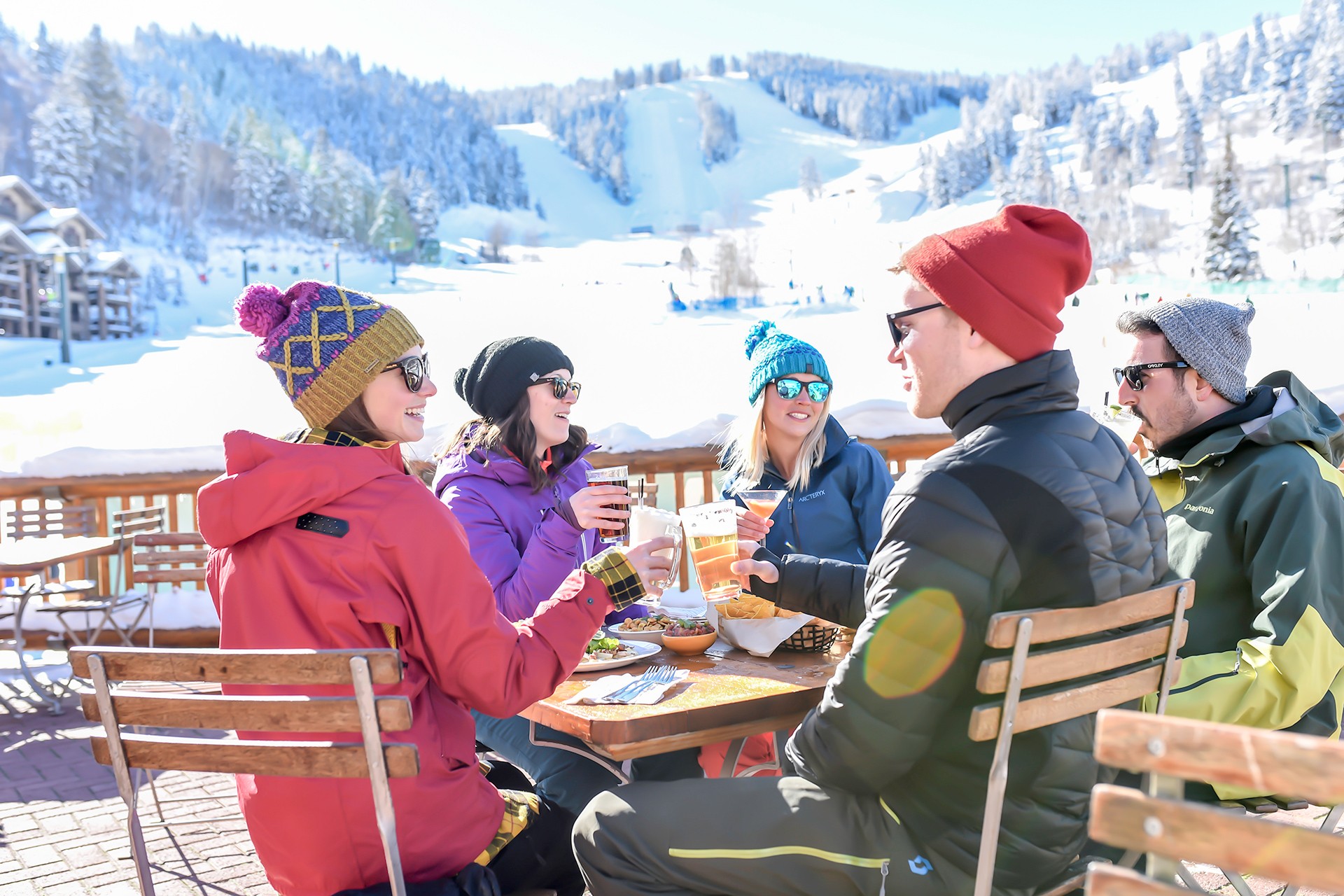
Après-ski and skiing go hand in hand, naturally. After all, did you even take a ski trip if you didn’t partake in après-ski? Après-ski is one of the preeminent skiing traditions, with each country, region, and even ski resort having their own ways of doing it. While we’ve written extensively about where and how to après-ski, in this article we explore the history of après-ski.
So what exactly is the history of après-ski and where did it begin? Well it’s easy to credit French skiers with the birth of the après-ski culture we love so much today. After all, après-ski translates from French to “after skiing.” However, while the French may deserve credit for modern-day celebrations and traditions, the history of après-ski goes beyond the iconic French ski destinations like Chamonix. Continue reading as we share more of the history of après-ski.

The History Of Après-Ski
The fact is that après-ski truly began when skiing began, albeit probably called something else. That means that après-ski likely originated in Scandinavia. The earliest known reference to skiing harkins back to around 3,000-4,000 BC. Primitive carvings depict human figures walking on skis. One of the earliest carvings is at Rødøy in Norway’s Nordland, where a skier is holding a single pole while wearing skis of equal length.
Sweden’s “Kalvträskskidan” ski dates back to 3,300 BC, while Norway’s “Vefsn Nordland” ski dates back to 3,200 BC. More than 20 well-preserved skis or ski fragments have been found in drained bogs in Norway. These discoveries prove skis have been used in Norway since prehistoric times. Early written evidence includes Greek scholar Procopius’ description of Sami people (those living in Northern Norway, Finland, Sweden, and Lapland) as “ski-running samis.” In fact, the very old Sami word for skiing, “čuoigat,” makes it clear that Sami people have skied for thousands of years.
Arguably the most famous symbol of skiing is Ullr, famed in Norse mythology as the God of Snow, Patron Saint of Skiers, the son of Sif, and stepson of Thor. Ullr (pronounced Oool-er) is said to be an expert skater, skier, and hunter who would glide around the world and cover the land with snow. He is the very god we send our prayers to prior to our ski trips to ensure perfect snow conditions.
Today, Ullr is often toasted in après-ski celebrations, such as in Breckenridge, Colorado, as skiers and snowboarders in Viking hats celebrate all things winter at the annual early December Ullr Fest. Locals and visitors of all ages join together to praise Ullr, in hopes of a powder-filled season. There’s a Main Street parade and then everyone takes part in the world’s longest “Shotski” – long lines of partiers placing several shot glasses equidistant on the deck of downhill skis and then downing them with a hearty “skol.” If you’re looking for a legendary early season après-ski kick-off party, this is it.

The Modern Era Of Après-Ski
Thousands of years later, the modern day version of après-ski did indeed take off in France as commercial skiing became popular around the world in the 1950s. Après-ski now provides an umbrella term for popular activities once the ski day is done. Après-ski really has no rules or universal time, though it usually starts in late afternoon, about the time the lifts stop turning. However, beware of saying “the last run,” as that could bring on bad luck. Après-ski can roll on past dinner and often into the wee hours of the night, and sometimes, like in the Alps, well into the next day as the lifts are about to start turning again.
As you may expect, there’s no real dress code either. After all, you’re heading for good times after rolling off the slopes. It’s common for your snow gear to double as après-ski attire, minus those clunky ski boots.
Après-Ski Traditions Vary Across The World
Après-ski customs vary from country to country and sometimes from resort to resort these days. Let’s start in the Alps, where today’s après-ski traditions first took hold. Europe’s alpine ski towns have a feeling of elegance to them. But from Austria to France, the après-ski scene also has a genuinely wild side at times with cabaret, underground clubs, and late-night Europop dance parties.
One of the liveliest scenes is in St. Anton, Austria, where sing-alongs and 3 a.m. dance parties are paired with giant beers and Jägermeister shots. Don’t miss the Krazy Kanguruh, known as the original home of après-ski in St. Anton/ Among the most famous après-ski spots in the Alps is MooserWirt, which is rumored to sell the most beer per square foot in Austria. Other headlining destinations for après-ski include: Ishgl, Austria, Val d’Isère and Chamonix, France, Verbier, Switzerland, and Cervinia, Italy.

The après-ski scene in the U.S. is as varied as the vibes at the resorts. Killington, Vermont, for example, means partying up and down the access road from Route 4. Can’t miss après-ski bars include the Pickle Barrel. Heading to Park City, Utah? The scene here is the High West Saloon, the only ski-in, ski-out distillery in the world. The Old Town Cellars is the spot for wine across the pedestrian bridge from the resort base. Deer Valley’s sophisticated Apres Ski Lounge and Beach Club features champagne and caviar.
The Little Nell long has been the place to party after a day on Aspen Mountain, while the storied Mangy Moose is the hot spot in Jackson Hole, Wyoming. Around Lake Tahoe, it’s all about Tamarack Lodge’s Unbuckle Parties at Heavenly and Northstar’s Töst, where skiers enjoy a complimentary glass of champagne off the East Ridge trail. Palisades-Tahoe’s Le Chamois (“The Chammy”) in Olympic Village is another Lake Tahoe hotspot. The Yodler at Mammoth Mountain brings a little taste of Europe to the Sierras with good brews and Bavarian food. See a complete round-up of the best après-ski bars in America in our article here.

Après-Ski Drinks
The top après-ski drink in the Alps (besides beer, of course) include mulled wine, a spiced wine known as vin chaud in France, and Glühwein in Austria. In Italy there’s Bombardino (Italy), a warm winter cocktail made with eggnog and brandy, and served hot with whipped cream. In Austria and Switzerland it’s all about Jägermeister. Or, go simple in the Alps with a classic Aperol Spritz, prepared with Aperol, Prosecco, and soda water.
Canada has the Caesar, their version of a Bloody Mary, and Kokanee, a British Columbia lager. Lone Tree Cider Company’s hard cider is a popular refreshing choice in parts of Canada. U.S. skiers and riders often celebrate the end of the ski day (or start of the ski night) with Bloody Marys, craft beer, and, in some of the more fancy spots, a glass of Champagne. But, pitchers of beer are often first choice.
Discover some of the best après-ski drinks around North America here.
Header Credit: Deer Valley Resort
 February 27, 2026