Share this

Few winter experiences compare to witnessing the northern lights—also known as the aurora borealis—dance across the night sky. Even better is seeing that natural light show from a snow-covered ski resort. At a handful of resorts that offer night skiing, it’s even possible to catch the aurora while enjoying a few turns under the stars. Of course, spotting the northern lights is easier said than done. The aurora is famously unpredictable, and there’s never a guarantee it will appear.
However, by traveling north, to the likes of Canada and Alaska, you’ll improve your chances of seeing the stunning natural light show. Here’s our list of North America ski resorts that offer some of the best odds for seeing the northern lights.
Ski Resorts Where You Can See The Northern Lights
SkiBig3 Resorts, Alberta
Alberta’s SkiBig3 resorts—Banff Sunshine, Lake Louise, and Mt. Norquay—are nestled within the breathtaking Banff National Park, which is part of the Rocky Mountain Dark Sky Corridor. The high elevation and minimal light pollution create ideal conditions for witnessing the aurora borealis. On crisp, clear nights, guests can simply step outside their lodge or ascend to nearby viewpoints to watch the northern lights ripple across the horizon. For an even more immersive experience, local guiding companies like Banff Stargazing Tours and Lake Louise & Moraine Lake Night Tours guide visitors to optimal vantage points, where the aurora sometimes paints the sky in vivid greens and purples above the rugged peaks.
If you’re lucky, you may even see the northern lights while skiing, thanks to night skiing at Mt. Norquay. Night skiing takes place at Mt. Norquay on Friday and Saturday nights from 5 p.m. to 9 p.m., with lift tickets as low as $54 for adults. “Visibility is always dependent on conditions and luck,” wrote Lilly Coote, the marketing coordinator for Canada’s SkiBig3 resorts. Coote recommended visiting the Alberta Aurora Chasers Facebook page, which has a reputation for providing timely, accurate updates.
Big White, British Columbia
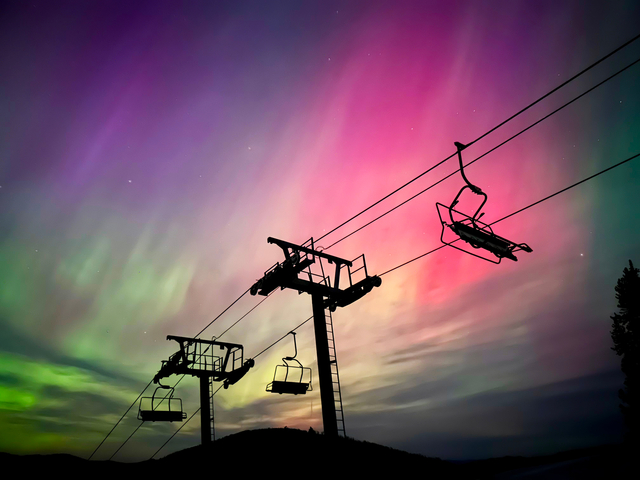
British Columbia’s Big White Ski Resort is well-known for its deep powder snow and family-friendly atmosphere, and occasionally it rewards skiers and riders with a stunning northern lights display. Due to its latitude, it holds potential for Northern Lights viewing, but only when geomagnetic conditions are strong. Big White offers 38 acres of night skiing, accessible from its Plaza and Bullet chairlifts, and boasts the longest night skiing vertical drop in North America. Tickets start at $30.
Big White’s elevated position away from the city lights of Kelowna provides a dark sky vantage point on clear nights. For travelers who want higher odds of seeing the northern lights, prime aurora destinations like Whitehorse and Yellowknife are accessible from nearby Kelowna International Airport (YLW).
Alyeska, Alaska
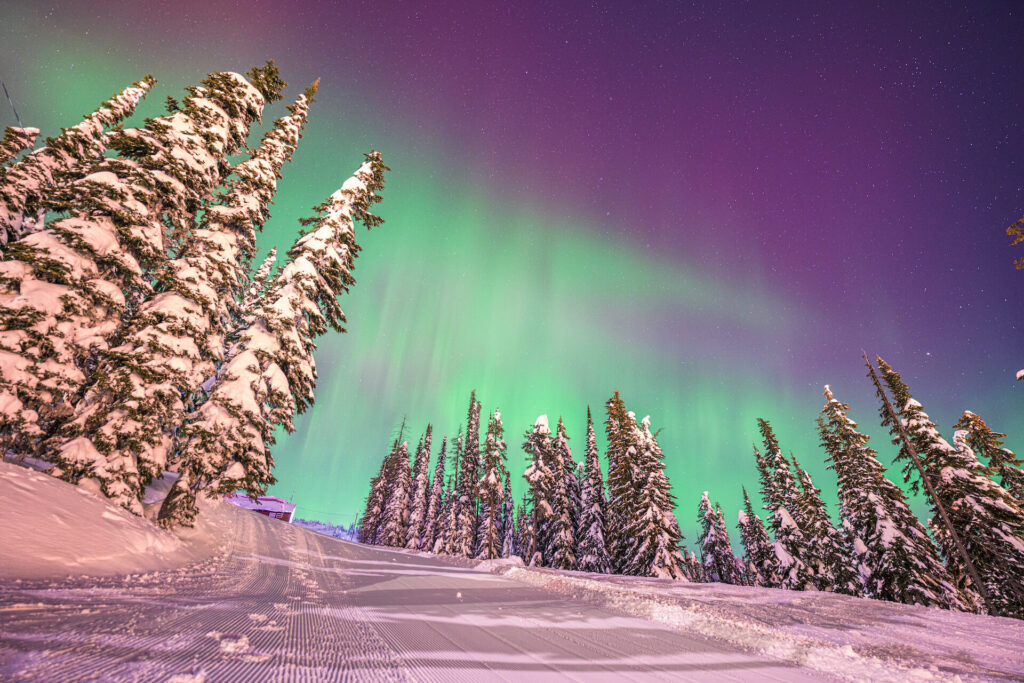
While Alyeska doesn’t have an official dark sky designation, its location far enough away from Anchorage, in Alaska’s Chugach Mountains, provides ample opportunities to view the northern lights. Guests can sometimes see the auroras from the slopes or their hotel balconies on clear winter nights, while regional outfitters offer guided excursions that connect visitors to prime aurora-viewing hotspots further north. Alyeska offers night skiing Thursdays through Saturdays from 4-8 p.m. It’s included with the price of a full-day lift ticket, which is as low as $77.
Further north, Fairbanks is renowned as one of the world’s top aurora destinations, sitting directly beneath the auroral oval and offering a higher probability of sightings. Pair a ski getaway to Alyeska with a trip up to Fairbanks or Chena Hot Springs, where specialized tours, heated viewing yurts, and aurora alert services maximize the chances of witnessing the northern lights in all their brilliance.
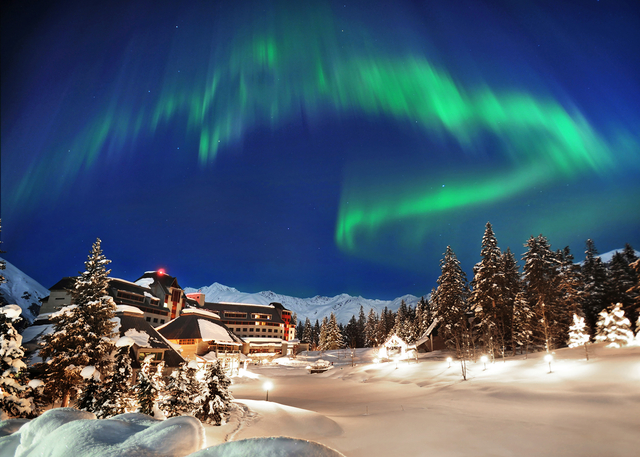
Eaglecrest, Alaska
Perched on Douglas Island and known as the highest road-accessible point in Juneau, Eaglecrest provides dark skies away from city lights, making it possible to catch aurora displays when geomagnetic activity is strong. While the coastal weather can bring cloud cover that limits visibility, clear nights reward visitors with sweeping views of the aurora shimmering above the surrounding mountains and ocean. On special occasions, Eaglecrest holds night skiing events. Check with the resort for upcoming events.
Moose Mountain, Alaska
Situated approximately 10 miles southwest of Fairbanks, Alaska, Moose Mountain offers a convenient location with skies generally free from immediate city light pollution, making it a viable vantage point for viewing aurora displays. While the ski area itself doesn’t have a formal, late-night aurora viewing camp, its elevation and relatively dark location make the surrounding area a practical spot for chasing the northern lights. Some Fairbanks-based tour operators utilize the general Moose Mountain area in their itineraries for guided photography and viewing sessions. Moose Mountain is one of the more reliable spots near Fairbanks for witnessing the northern lights.
Tips For Seeing The Northern Lights
Typically, the northern lights, when they are visible, are most visible between 10 p.m. and 2 a.m. Dress in warm attire and head away from cities, as their light pollution can drown out their appearance. According to the NOAA, the full moon can also impact their visibility. Finally, pack your patience—since the northern lights appear sporadically, you may have to wait a while, and even then, you may not see them. As you wait, avoid looking at bright lights, like your phone or flashlight, so your eyes remain adjusted to dark conditions. For best results, avoid looking at bright lights for at least 25 minutes.
“The best experience will be in dark locations away from ambient light,” wrote Coote. She recommended keeping an eye on the National Oceanic and Atmospheric Administration’s (NOAA) space weather forecast. There are also a number of Facebook groups, like Northern Lights Alert, which post updates and photos when the northern lights are active.
Hero Image ©Big White Ski Resort

 March 06, 2026