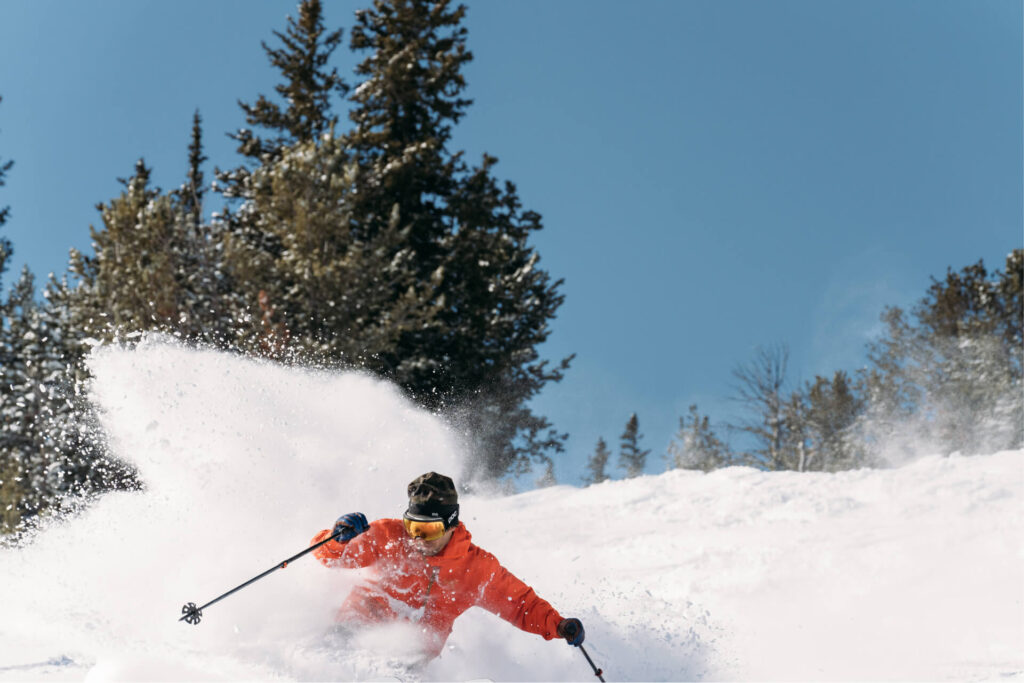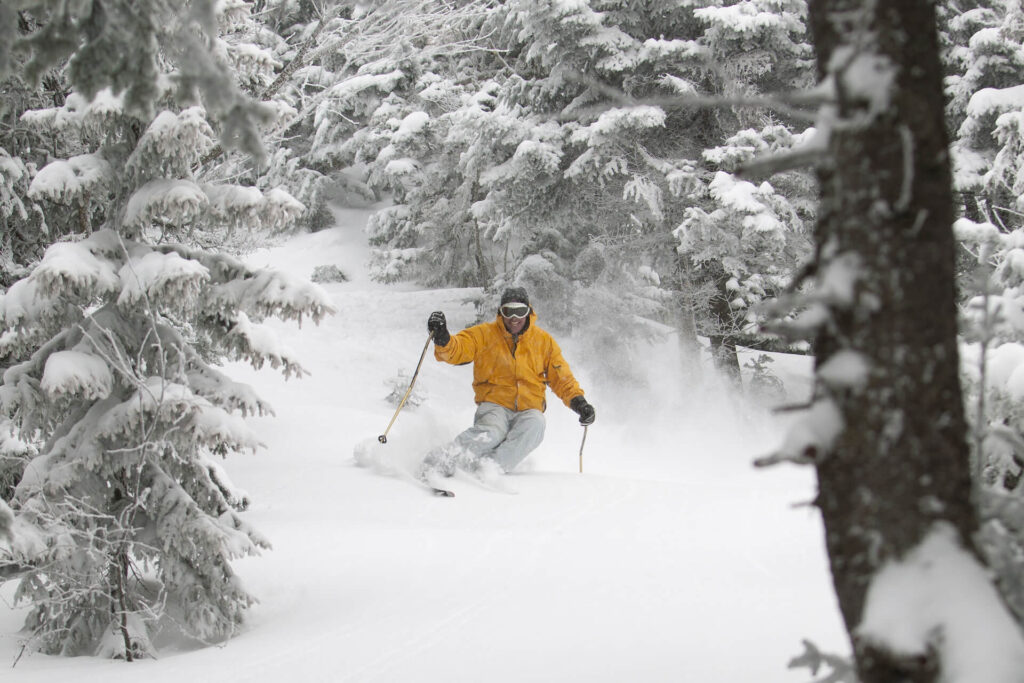
Most skiers and riders probably don’t think of the East Coast as a hub for powder skiing. After all, some Western resorts can get as much snow in one big month as some East Coast ski areas see in a season. Nonetheless, the East has tons of incredible glades, powder stashes, and steep-and-deep sidecountry and backcountry terrain to enjoy, and you may be surprised by how much snow some Northeast ski areas get. Jay Peak, for example, averages around 350 inches a year and has topped 400 inches in big seasons.
So whether you’re a bona fide powder chaser or just looking for the best odds of ducking into the glades, check out our list of the top places for powder skiing on the East Coast. Snowfall figures below are approximate annual averages.
The Best East Coast Ski Areas for Powder Skiing
Jay Peak, Vermont: About 350″ of Average Annual Snowfall
Jay Peak takes the crown as the snowiest ski area on the East Coast. When Vermont gets hit with a storm, Jay often gets far more snow than ski areas farther south. Just a few miles from the Canadian border, its location and variety of terrain make it one of the top ski areas in New England. Skiers and riders have plenty to choose from, including more than 100 acres of glades, secret powder stashes, and terrain parks. For advanced skiers, Jay Peak has a liberal in-bounds policy for its woods. Follow Jay Peak’s guidelines for off-piste skiing, like never skiing the woods alone and getting out of the glades well before the end of the day.

Stowe, Vermont: About 315″ of Average Annual Snowfall
About an hour from Burlington, Stowe has a long history, with lift-served skiing dating back to the 1930s and 1940s. Set on Vermont’s highest peak, Mount Mansfield, along with neighboring Spruce Peak, Stowe is one of the pioneers of Vermont skiing. Check out Stowe’s famous Front Four, Starr, National, Liftline, and Goat, for steeps and natural snow. Some of these classic trails date back to the 1940s and have that steep, narrow, old-school Vermont feel, and the adjacent trees hold some of the best stashes for fresh tracks.
Stowe is also one of New England’s preeminent family ski resorts, with plenty of terrain for everyone from beginners to experts. Bonus: The charming town of Stowe makes for a great après-ski experience.

Bolton Valley, Vermont: About 300″ of Average Annual Snowfall
Bolton Valley is another Vermont ski area convenient to Burlington, just about 35 minutes from Burlington International Airport. More than 300 inches of snow in an average season and extensive backcountry terrain make it a great destination for powder lovers. In the Green Mountains, Bolton Valley has about 70 trails across roughly 300 skiable acres and night skiing several nights a week. Off-piste skiers and powder hounds should check out Bolton Valley’s backcountry terrain, with access to thousands of acres of wilderness and both cut and natural backcountry lines. Much of that terrain sits on the leeward, northeast-facing sides of its high ridges, so snow accumulates and stays light and shaded through the winter.

Bolton Valley also has a guided backcountry program with private tours and lessons that make the backcountry more accessible to everyone.
Mad River Glen, Vermont: About 230″ of Average Annual Snowfall
“Ski it if you can” is the famous slogan of cooperatively owned Mad River Glen in Vermont’s Mad River Valley. It’s the only skiers-only resort in the East and home to one of the last single chairlifts in operation. Its slogan comes from tricky, technical terrain and an old-school atmosphere that has to be skied to be believed. Mad River Glen doesn’t get as much snow as some others on this list, but its technical terrain, lots of glades, and unique vibe make it a powder-day favorite. The mountain has about 115 acres of trails plus several hundred acres of tree skiing.
Mad River Glen opened in 1948 as one of Vermont’s early major ski areas. In 1995, skiers formed the Mad River Glen Cooperative to buy the mountain, keeping it independent and preserving its community feel. The co-op values low skier density and natural terrain.

Sugarbush, Vermont: About 250″ of Average Annual Snowfall
Sugarbush, just down the road from Mad River Glen, sees a similar amount of snow each year. It has two main mountains, Lincoln Peak and Mt. Ellen, each with a variety of terrain. When there’s enough snow, locals head to the beloved Castlerock area on the Lincoln Peak side, home to some of Sugarbush’s toughest steeps and trees. Across both mountains, Sugarbush has dozens of wooded areas with tree skiing for beginners through experts, and it offers guided skiing in the Slide Brook Basin, the wild terrain between the two mountains.

Smugglers’ Notch, Vermont: About 320″ of Average Annual Snowfall
Smugglers’ Notch, affectionately known as Smuggs, is another snowy Vermont ski area, just over the notch from Stowe in Jeffersonville. It has about 1,000 acres of terrain, including what it bills as the only triple black diamond trail in the East, and it’s consistently rated one of the best family resorts in the country, with tons of off-slope activities and a top-notch ski school that makes it easy for parents to sneak in some solo laps.
As you’re taking laps, Madonna Mountain has some of the best steeps and summit views in the state, and the surrounding area holds excellent tree skiing for those who know where to look.

Killington, Vermont: About 250″ of Average Annual Snowfall
The Beast of the East earns its title with the most skiable terrain of any resort in the East, and paired with sister mountain Pico, it’s hard to beat. Killington also hosts the women’s World Cup races most Thanksgivings. Killington and Pico, about six miles apart, get similar snowfall and offer a wide variety of terrain across seven distinct peaks and nearly 2,000 combined skiable acres, including plenty of glades for powder days. Woodward Mountain Park at Killington is also a popular spot for those who like to get airborne.

Sugarloaf, Maine: About 200″ of Average Annual Snowfall
Sugarloaf, on Maine’s second-highest peak, is among the snowiest ski areas in the state and draws powder skiers with the only lift-served terrain above treeline in the East. When the snow is good, its Snowfields are about the closest thing you’ll find to Western terrain. Sugarloaf has more than 160 trails and about 1,360 skiable acres, including plenty of glades, and it tends to be less crowded than some of the region’s other big resorts thanks to its distance from major cities.

Saddleback, Maine: About 225″ of Average Annual Snowfall
Since reopening in 2020, Saddleback, a historic Maine ski area dating back to 1960, has seen a series of upgrades and improvements. Skiers can enjoy about 68 trails across 600-plus acres of terrain, 2,000 feet of vertical, and lift-served terrain topping out above 4,000 feet. The headliner, especially after a storm, is its big network of hand-cut glades, a great New England sidecountry experience. Saddleback is also known for relatively affordable lift tickets and a busy ski school, making it a great option for mixed-ability groups. While many skiers head to the big resorts on a powder day, don’t overlook Saddleback.
Mont-Sainte-Anne, Quebec: About 210″ of Average Annual Snowfall
You may not think of Eastern Canada when you think of East Coast skiing, but don’t sleep on Quebec. Just outside Quebec City, Mont-Sainte-Anne has more than 500 acres of skiable terrain and about 70 trails, with night skiing on many of them. It’s known for gorgeous views of the St. Lawrence River and long groomed runs, along with good tree skiing after a storm. On off days, guests can relax at a nearby Nordic spa or visit the famous Basilica of Sainte-Anne-de-Beaupré a few miles away.

Even when the snow isn’t falling, these East Coast ski areas keep the chairs spinning with snowmaking, so whether you’re after deep powder or smooth corduroy, you’ll find somewhere in the East that fits the bill. This is by no means an exhaustive list of East Coast powder spots. Check out more East Coast ski resorts and snow reports here, and see our list of the most challenging ski resorts on the East Coast.