Share this

As you might expect, Japan does things differently from the rest of the world, which is exactly what makes it such a great place to visit. But because everything seems so foreign, planning a ski trip to Japan can be overwhelming. So we’re here to help as you plan your first winter trip to Japan. Read on for all the answers: What’s skiing in Japan like? Which resort is best? When should you go? And what else do you need to know?
Everything To Know For Your First Winter Ski Trip To Japan
Which Japan Ski Resort Is Best?
This is the big question, and most people are usually weighing between Hakuba Valley or Niseko United, both of which are large multi-resort areas. We have selected those two, plus Kiroro, Rusutsu, and Furano, as the first Japanese resorts to cover on OnTheSnow.com, providing detailed information, snow reports, and live webcams.
These are the ski resorts that best suit first-time travelers to Japan. All of them are traveler-friendly destination ski resorts or multi-resort areas with multilingual staff, offering lessons and backcountry tours in English. Guests can expect Western-style, modern hotels with direct access to the slopes and are large resorts by Japanese standards, offering both beginner-friendly and expert terrain, as well as plenty of deep, fluffy powder.
Niseko United in Hokkaido is the huge, modern star of the Japanese ski tourism industry, boasting luxury hotels and restaurants, glass-and-steel buildings, and state-of-the-art lift infrastructure. Niseko United’s four interlinked side-by-side resorts and separate villages attract complete beginners and pros in equal measure. For a first-time trip, you can’t go wrong here.
Hakuba Valley is a sprawling area of 10 ski resorts in the Japanese Alps close to Nagano. Two pairs of resorts are interlinked, but otherwise you’ll need to use the bus or drive. Hakuba’s resorts have something for everyone, from some of the steepest terrain in Japan to quiet family ski hills.
Kiroro and Rusutsu are smaller as they are stand-alone resorts. Like Niseko, they both feature modern luxury resort hotels, but neither has a traditional village to speak of. Both are less popular than Niseko and Hakuba, but many prefer them for their convenience, exclusivity, and less crowded slopes. They also have incredible off-piste terrain. Furano is more traditionally Japanese, less hectic, and has a ski-town vibe that’s different from the other Hokkaido mega-resorts. You can find out more about each ski area in our in-depth guides:
For the more adventurous, or those who want to go where other tourists don’t, there are hundreds of smaller ski hills in Japan, from traditional onsen villages to retro 90s ski-bubble era ski towns. Find out more about the best of the rest here. Shiga Kogen is more Japanese, with miles of pistes and interconnected villages. If you’re not so bothered about being at the biggest resorts, then the second-tier resorts of Appi Kogen, Zao Onsen, Madarao Kogen, and Mt Naeba are all good options and popular with the locals.
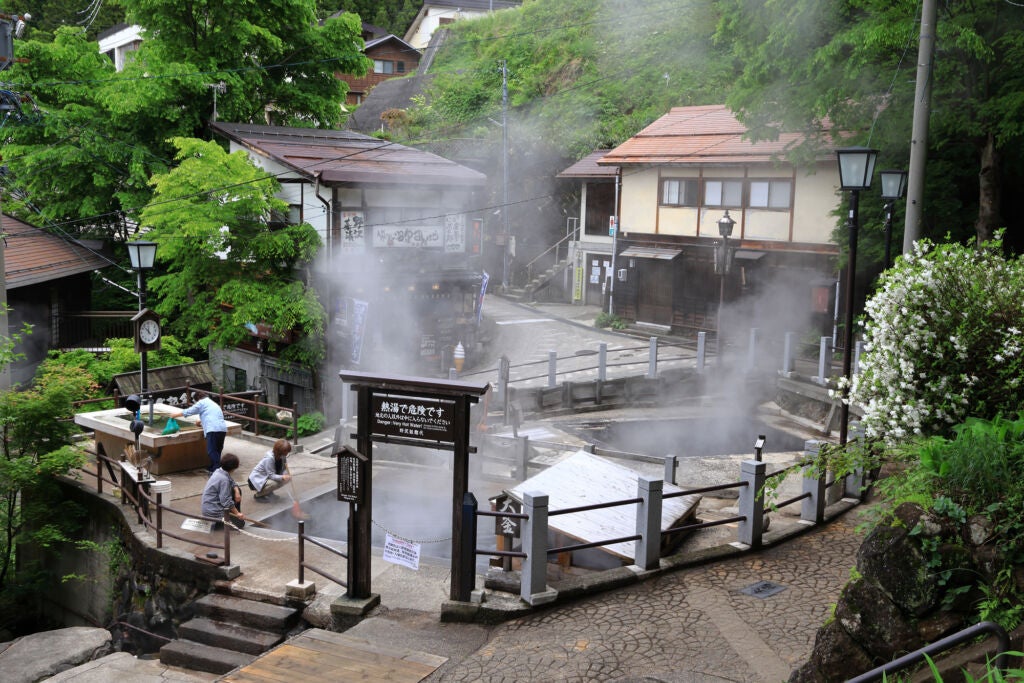
What Are The Mountains Like In Japan?
Most resorts are below the treeline, and most runs are between 0.5 and 2 miles long, with the majority of trails below 30 degrees in angle, although obviously longer runs and steeper terrain exist. This is not to put down Japan as a destination. It’s just to say that if steep in-bounds runs are what you’re after, make sure you pick the right destination: Hakuba Valley.
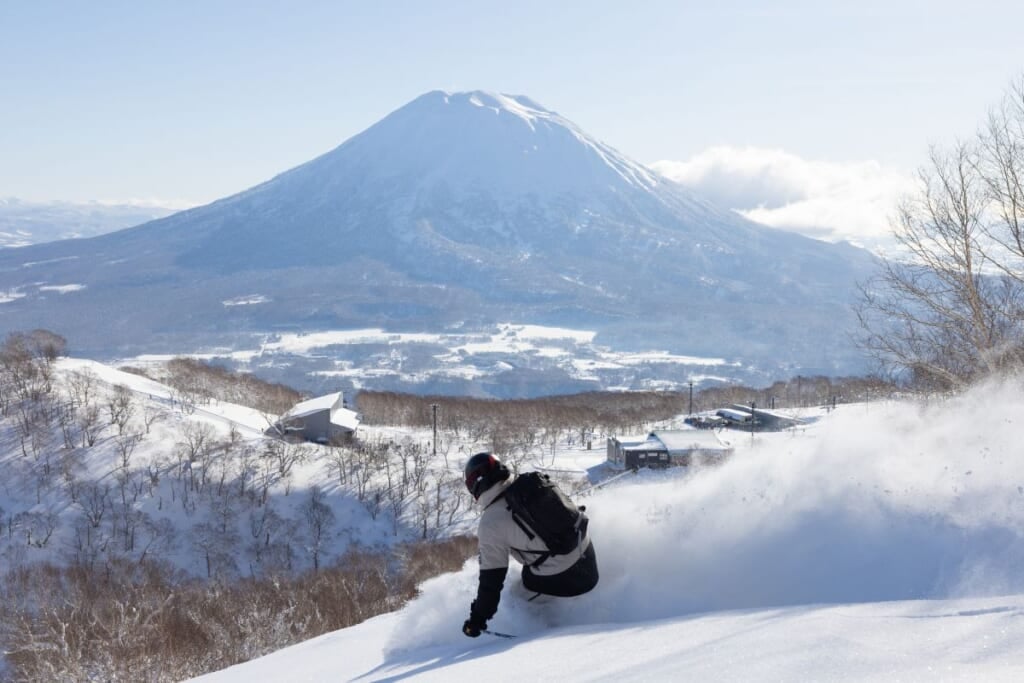
Although these stats might not be exciting on paper, when everything is draped in three feet of fluffy white powder, it doesn’t matter. Hokkaido and much of Honshu are volcanic, and skiing on a volcano is one of the great things about visiting Japan. The views are absolutely breathtaking on a clear day. Some of Hokkaido’s ski resorts are also coastal, which is a novelty in itself. Hakuba Valley, being inland and on a tectonic mountain range, has a much more European topography, with steeper, more rugged terrain.
A huge feature of Japan is its tree runs. While skiing glades elsewhere is mostly for stronger skiers and riders, it’s more mellow in Japan, with smaller trees and less steep hills. If you want to learn how to ski in the trees and deep powder, Japan is the place to do it. Also, away from Hakuba and the popular resorts in Hokkaido, most people stay on piste, so it’s possible to get fresh tracks all day long, or even a day or two after snowfall at smaller resorts.
How Much Does It Snow In Japan?
A lot. From Christmas to the end of February, it usually snows three to five days a week. In the snowiest places like Niseko and Kiroro, it can snow for 30 days straight. One thing that might be overlooked with snowfall stats is that in some places in the world, such as the French Alps, you can get two weeks of sunshine, then 30 inches of snow in 48 hours, which brings the whole place to a standstill. This rarely happens in Japan. The snow taps turn on, and it just keeps pumping out enough to refresh things but not too much that the lifts don’t open. Dry spells do happen, but they are rare. Many resorts in Japan don’t even measure snowfall, but those that do often report between 500 and 700 inches a season at base level.
Equipment
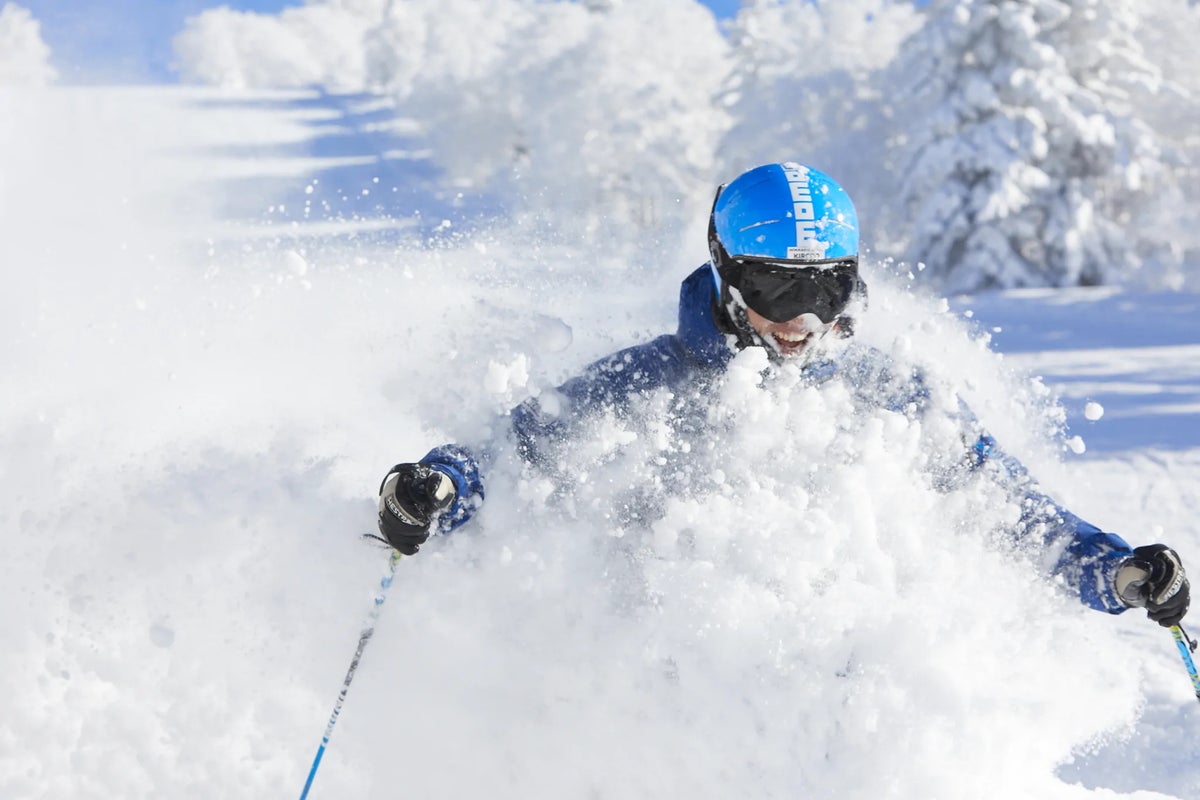
If you intend to go off-piste, fat skis or a dedicated powder board will ensure you enjoy Japan to the full. If you usually ski in sunny conditions, you might find your usual eyewear is too dark for Japan’s overcast winter. It’s a good idea to have a lens with high light transmission, which can also be used for night skiing.
How Crowded Do Japan Ski Resorts Get?
Even with the recent influx of overseas tourism, Japan’s ski resorts are largely deserted outside of weekends and peak dates. Hakuba Valley, Niseko, Rusutsu, Furano, and Nozawa Onsen are the internationally famous resorts that 90% of Western visitors go to, where you might notice some crowds at the gondola in the morning. It’s more rare to see lines for lifts away from the base areas.
Peak dates are Christmas & New Year, Chinese New Year (dates vary), and mid-January to mid-February, as well as Japanese holidays such as Coming of Age Day (the second Monday in January), National Foundation Day on February 11, and the Emperor’s Birthday on February 24. Any ski resort located near a major residential area, such as Tokyo, Nagano, or Sapporo, that offers public transportation to the hill within an hour or two will also be busier during these times. Other resorts are less affected, especially those in Northern Honshu, where population density is low.
Even at peak times, a 30-45 minute wait for a gondola in the morning is as bad as it gets and usually only happens on Saturdays or holidays. Most of the time, there are only a handful of people at any lift, and you’ll have more space than you’ve ever experienced. On a weekday, it’s not uncommon to feel like you have a whole run to yourself.
When we talk about crowds and lift lines in Japan, it’s all relative. Most first-time travelers to Japan don’t even notice the lift lines in Niseko. It’s just that for locals, seeing a lift line at all is an inconvenience they’re not accustomed to. For example, Aomori Spring limits ticket sales to 1,200 per day, but most days this isn’t necessary. For reference, Vail in Colorado gets an average of 14,000 people a day, and they start limiting at 19,900.
Generally, busyness on the mountain is not an issue, and you can usually still find parking, even at peak times. For other activities and when trying to find a restaurant for dinner, it can be difficult. If you don’t have meals included, don’t expect to just walk into a restaurant on the night. Contact your hotel and ask them to make bookings for you. Even in a self-contained resort hotel complex, restaurants get fully booked a few days before.
When To Go?
If you’re looking for deep powder, then mid-January to mid-February is your best bet for a Japan ski trip. It snows most in December and January, but you need time for a base to build up and cover the vegetation off piste. For Hokkaido, it’s usually reliably snowy until early March. Storms are frequent during this time. It can be bitterly cold and windy at the height of winter, and snow can fall for days straight, making visibility difficult. This is a dream for serious skiers and snowboarders who crave storms and deep snow, but it may be less appealing to families with children or those who prefer to stay on piste. Late February to the end of March is a much better time to visit Hokkaido, as the wind subsides, the sun emerges, and life on the mountain becomes more enjoyable. It still snows, but often at night, so you’ll likely get to enjoy some bluebird powder days. Also, the competition for accommodations and restaurants is significantly lower.
The Language Barrier
Not speaking Japanese isn’t a problem. Even in a situation where nobody has any shared language, pointing, gesturing, and Google Translate will get you through. Japanese people are patient and polite, and they will help you if you are respectful. Throughout Japan, signage is often in English, and at the major international resorts, English-speaking staff are common.
Cultural Differences
Japan is a very friendly, safe place where people are extremely polite. Japanese people have been incredibly patient with tourists and their cultural mistakes, but with recent overtourism, some are starting to push back. It’s incredibly important to be careful, especially regarding noise, politeness, and cleanliness. Things like not ducking ropes, talking quietly, not making demands, smoking in designated places, leaving your shoes by the door, and being quiet in your hotel room go a long way to making sure Japan remains a welcoming place for tourists. Japan is a wonderful place to visit, partly because of its more traditional way of life, so it’s important to respect that and try to blend in as much as possible.
Book Early
Asian travelers book early – sometimes a year ahead. Get your flights and accommodation booked as early as possible. At least eight months before your travel to get the best deals. Then, ski lessons, car hire or transfers, and anything else you need can be booked three to six months out. Trains can be booked at the last minute or on the day of, unless you’re traveling during a Japanese holiday. Lift tickets and rentals don’t need to be booked in advance. If you need a ski guide, it also pays to book by around September, as popular dates will start to fill up.
How To Book
Google Maps is an excellent tool for finding hotels near ski resorts that offer free cancellation and for comparing prices. All major online platforms, such as Booking.com, Agoda, Trip.com, Hotels.com, and Expedia, provide a good selection of hotels in Japan. For your first self-planned trip, it’s best to stick to well-known international booking sites.
Our partner, We Ski, is also an excellent resource for creating all-in-one packages with any combination of hotels, flights, lift passes, and transfers or car hire. As We Ski is a ski resort specialist, you can be sure your hotel is in a good location, and you can book everything in one place. You can search for trips on We Ski directly from our website. Search for “Japan” to compare properties across multiple ski resorts, something that’s difficult on other major platforms.
Flights To Japan
International tourists usually arrive at Tokyo’s two airports on the main island, Haneda and Narita, or New Chitose Airport in Hokkaido. Most major cities offer direct flights to Tokyo, but only a handful offer direct flights to New Chitose, including Seoul, Singapore, Shanghai, Taipei, and Hong Kong. If you’re set on a visit to Hokkaido, a couple of nights in one of these cities can help with jet lag and allow you to see more of Asia. If not, Tokyo to New Chitose is one of the most frequent flight routes in the world, and very cheap tickets are readily available. If you’re bringing equipment, make sure to book enough extra baggage and check the oversize baggage rules for each airline
Rental Equipment
In general, rental equipment, including outerwear, is new and high quality. Salomon equipment is virtually ubiquitous, and high-spec rentals are also common at destination resorts.
Lift Passes In Japan
Multi-day passes rarely offer worthwhile savings in Japan. Usually, buying a one-day or four-hour pass is the best option, unless you’re at a busy resort where you want to avoid waiting in line. Hotels and local convenience stores, such as 7-11 and Lawson, often sell discounted lift tickets. If you have a multi-resort pass with international destinations, like an Epic Pass or Ikon Pass, refer to our in-depth guide to see which resorts are included.
Ski Lessons In Japan
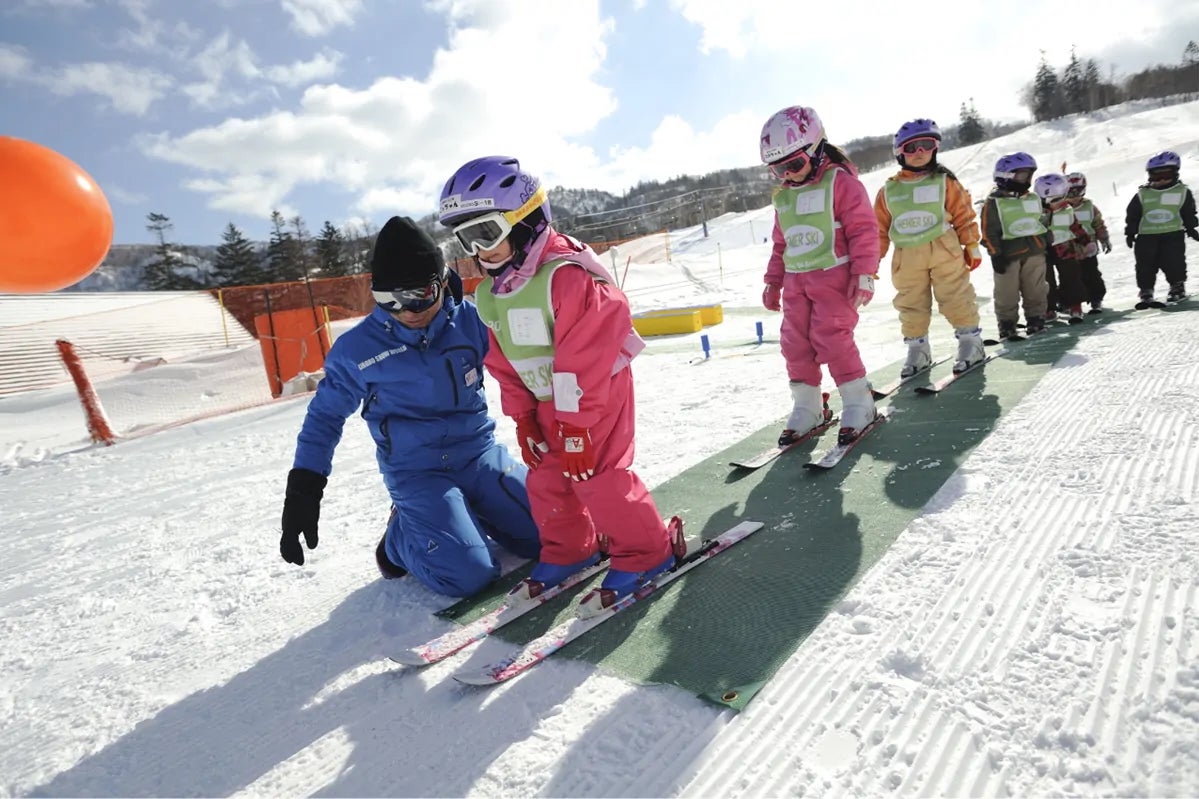
If you don’t speak Japanese, lessons can be surprisingly expensive in Japan. Public group lessons that match ability are rare, so you’ll usually need to book a private lesson for 1-4 people. This can be awkward for groups with differing abilities and soon adds up. If you need lessons, research the details for your chosen destination first. All-inclusive options like Club Med Kiroro Grand include lessons.
Lunch
Vending machines are common for placing your order before collecting it at a counter. Some only accept cash, and at smaller resorts, they are often in Japanese, with some only accepting old Japanese notes. If you’re away from the international resorts, be prepared with cards and old and new notes, and just ask someone to help if you can’t work it out. At big international resorts, it’s all in English.
Driving
Make sure you have winter tires, which are usually included in winter in Hokkaido or snowy areas like Nagano, but aren’t necessarily included away from the snowy areas, such as in Tokyo. If you’re confident in winter conditions and used to driving on the left, then you should be fine. Japanese drivers are very polite and will even give way to tourists in a rental car. If you aren’t confident, this isn’t the place to learn how to drive in winter, as whiteouts and snowstorms are common. The blood alcohol limit in Japan is zero alcohol, so don’t drink and drive. Generally, driving is low stress, and the roads are well maintained in winter.
Want To See More Of Japanese Culture?
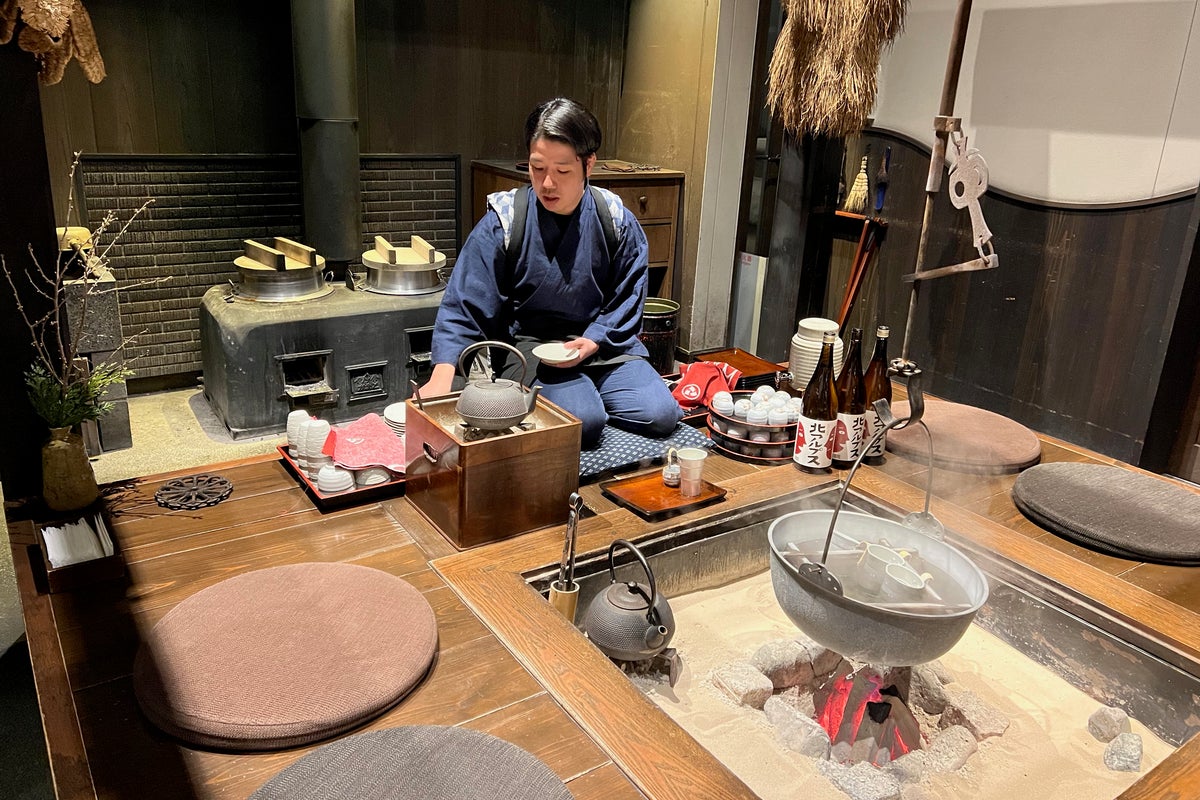
Combine your ski trip with a visit to Tokyo, Kyoto, or other non-skiing locations. In March, the south of Japan is already warming up. Or, base yourself in a traditional town close to a ski area and split your time between skiing and sightseeing. For example, stay at Hoshino Resorts KAI Alps in Omachi, a 25-minute drive from Hakuba Valley, and immerse yourself in the local food, museums, and historic sites. The hotel itself offers cultural experiences, such as fine dining in private dining rooms, sake warmed by fire, and bathing in communal outdoor hot springs.
Guided Ski Tours In Japan
If you’re coming all the way to Japan, a sidecountry or backcountry tour is a must. You don’t have to be an expert to enjoy the backcountry in Japan; you just need to be proficient in fresh snow. If you want to hike through a forest and ski back on nothing steeper than 10 degrees, you can. It’s a great place to learn and develop backcountry skills, as although going beyond the resort boundary has inherent dangers, Japan – and Hokkaido in particular – has a relatively low avalanche risk overall, and your guide can plan based on your desired risk levels.
It’s still dangerous, but it’s the perfect place to get started if gnarly terrain frightens you. The scenery is truly breathtaking, and it’s rare to cross paths with other groups away from the big resorts. There are also a number of backcountry-focused mountains with one giant “ropeway” lift (and sometimes a couple of chairlifts) that serve endless unmanaged terrain, like Asahidake, Hakkoda, and Mt. T, which can’t be missed. Book a guide and there’s a good chance you’ll have the best powder day of your life.
One of the best ways to enjoy a first trip to Japan is to join a multi-day tour. Apart from your flight, everything is taken care of, and you’ll get to enjoy a range of different ski resorts, the best restaurants, onsen, and other cultural experiences like performances, historical buildings, or wildlife. It also means you’ll have someone with you to make sure you know what to do in every situation.
For reputable English-speaking guides, contact Rising Sun Guides, Hokkaido Mountain Experience, Whiteroom, or Rhythm for one-day or multi-day tours, both in resort and the backcountry of Hokkaido and Hakuba.
Header image: ©Rusutsu
 September 17, 2026