Utah Ski Resorts
Most Popular Utah Ski Resorts
Planning a Utah ski trip? Browse our collection of skier and snowboarder-submitted reviews for Utah ski resorts to see which mountains claimed the top spot in each category. Utah reviews rank ski areas on a scale of one to five stars in the following categories: Overall Rating, All-Mountain Terrain, Nightlife, Terrain Park and Family Friendly. See how your favorite Utah ski area stacks up among the top rated in terms of skiing and après.
ONTHESNOW+ PARTNER
Featured Resort
Solitude Mountain Resort
UTAH, UNITED STATES
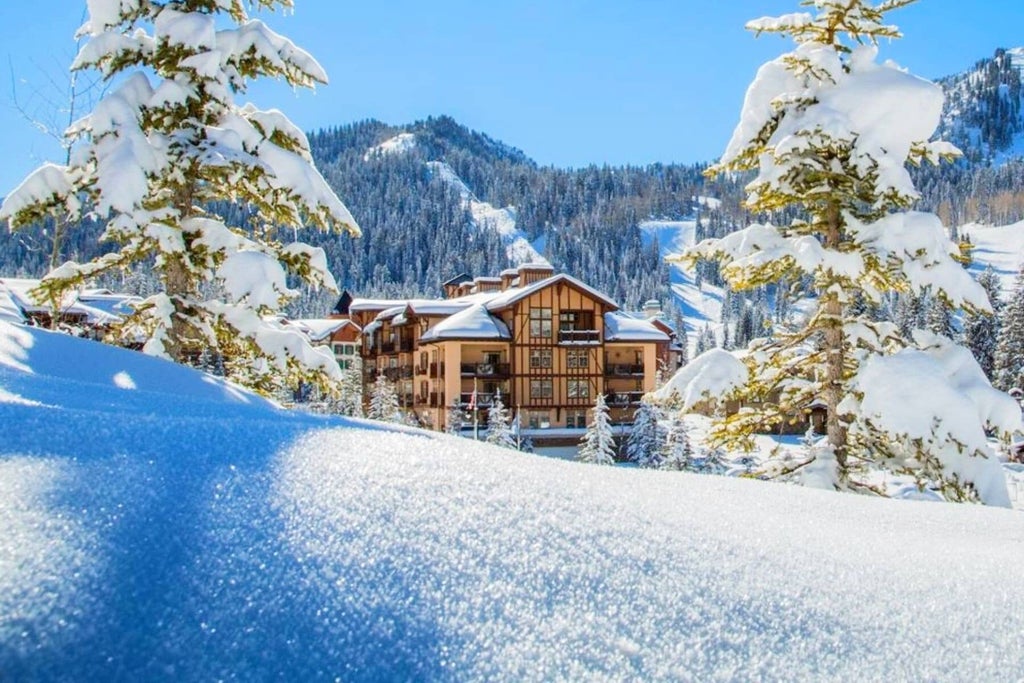
Solitude Mountain Resort is tucked into Utah’s Big Cottonwood Canyon, just 30 miles southeast of Salt Lake City. With 1,200 acres of skiable terrain and an average annual snowfall of 387 inches, it’s a mountain that delivers consistent powder and var...
See Resort GuideTop ski resorts in Utah
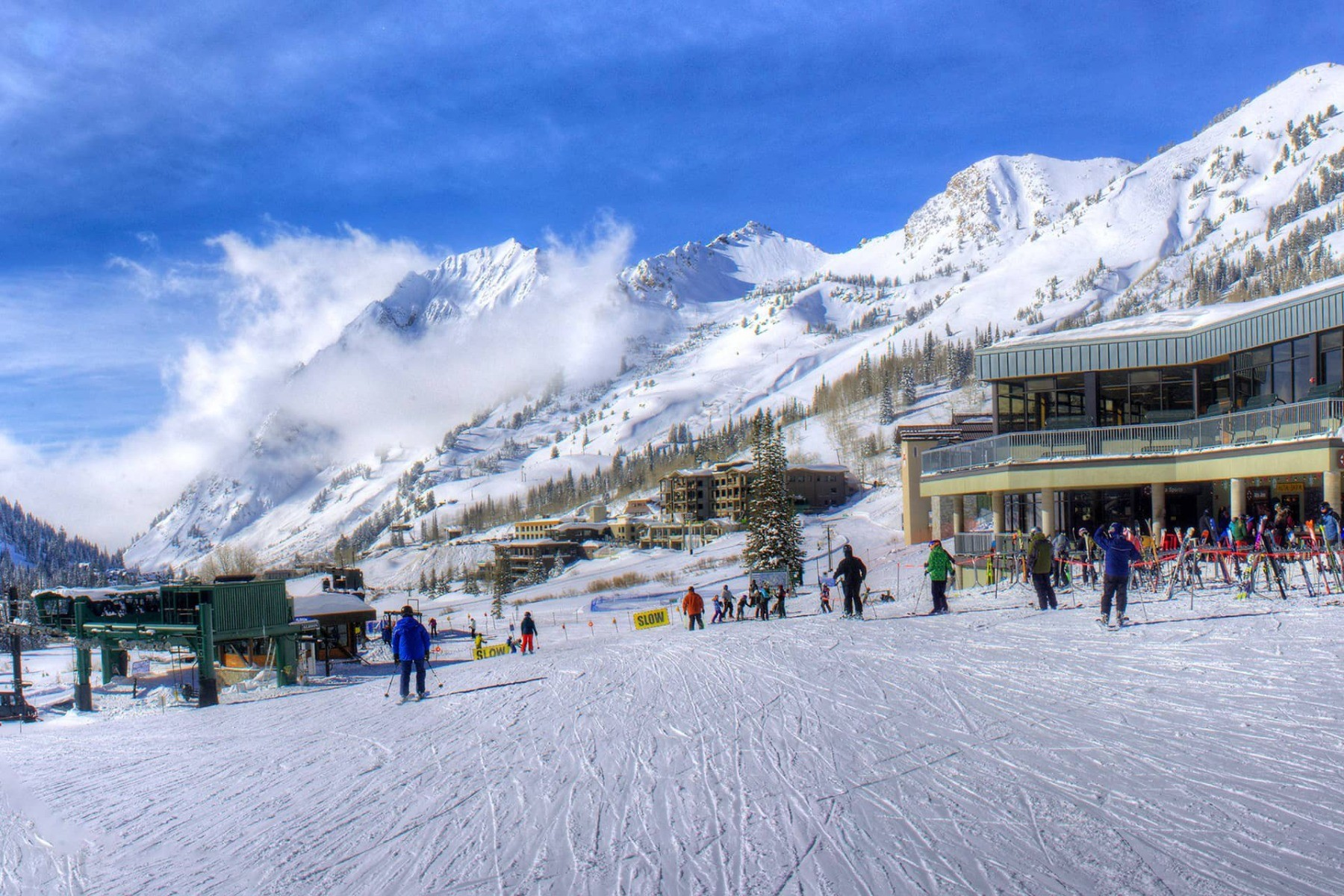
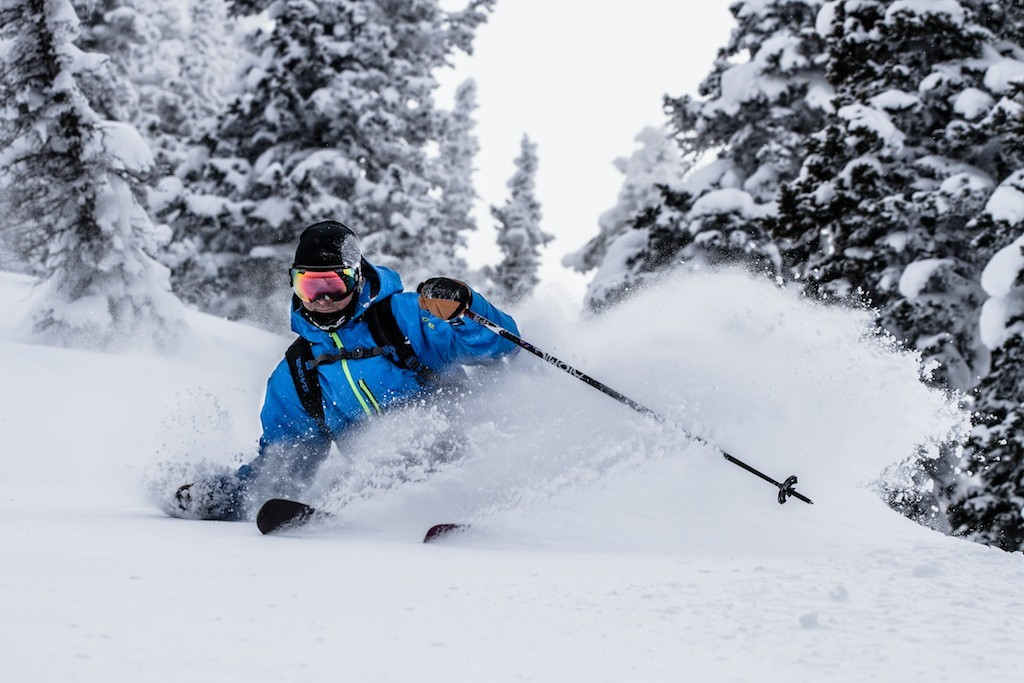
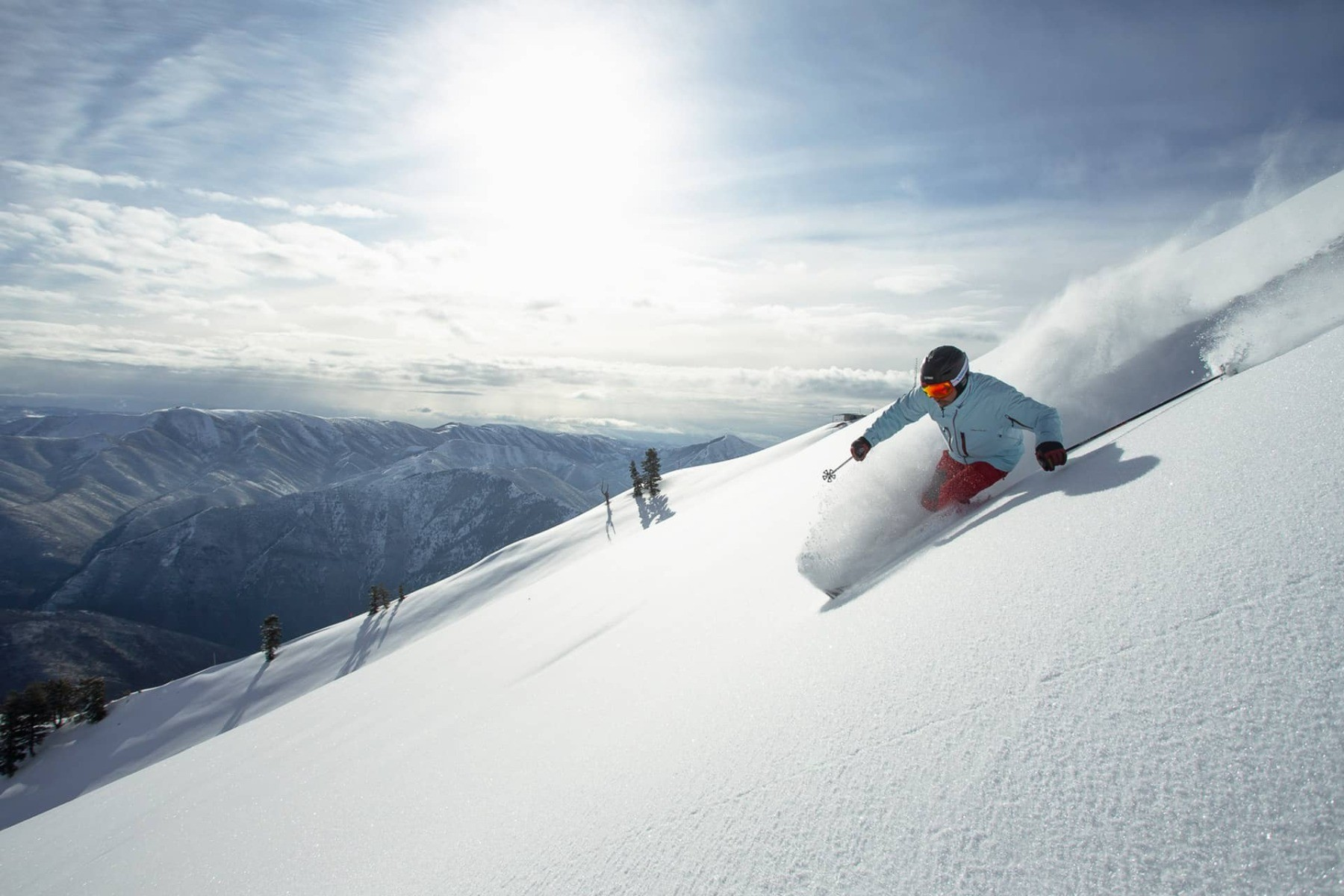
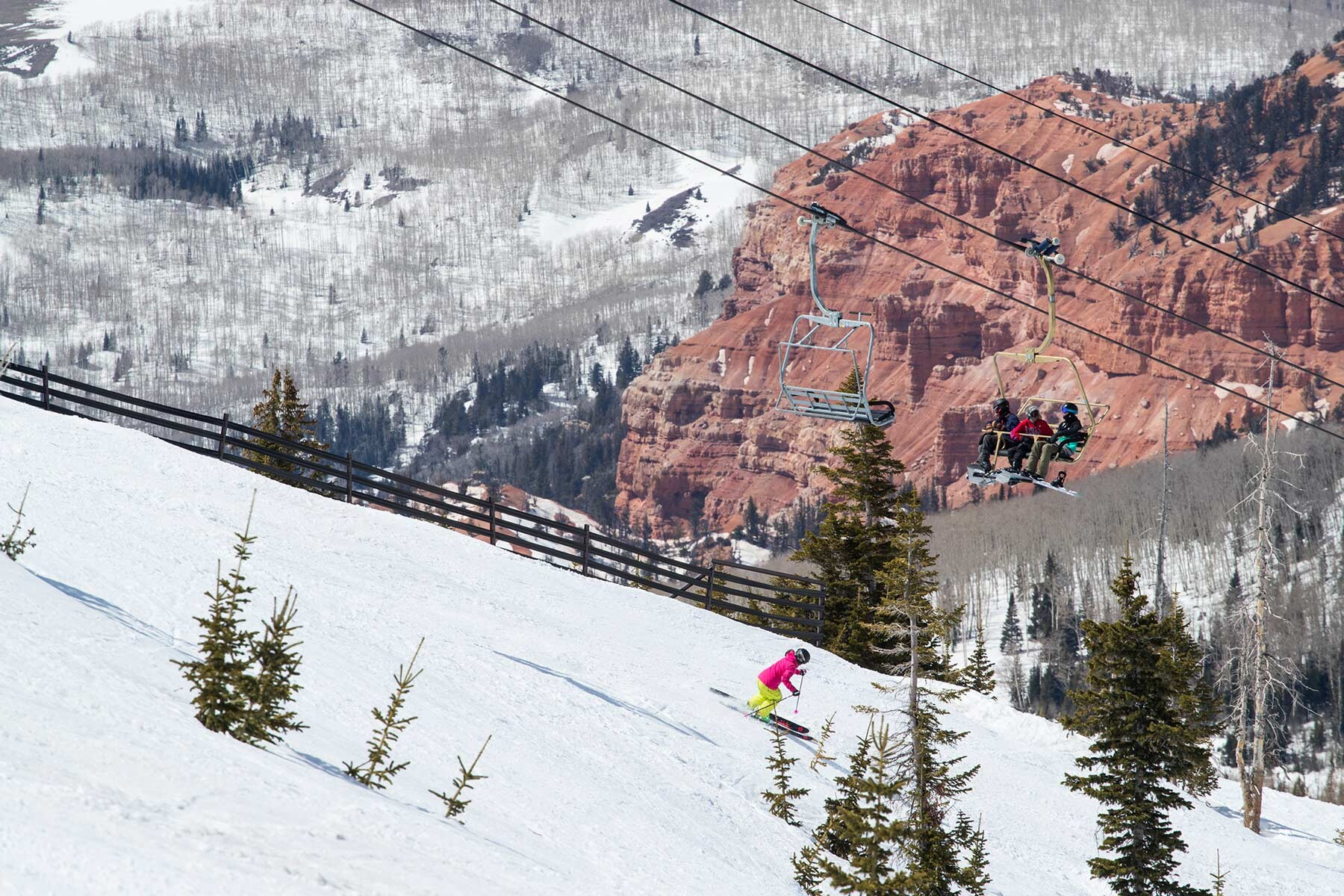
All Utah ski resorts
Utah Ski Resorts FAQ
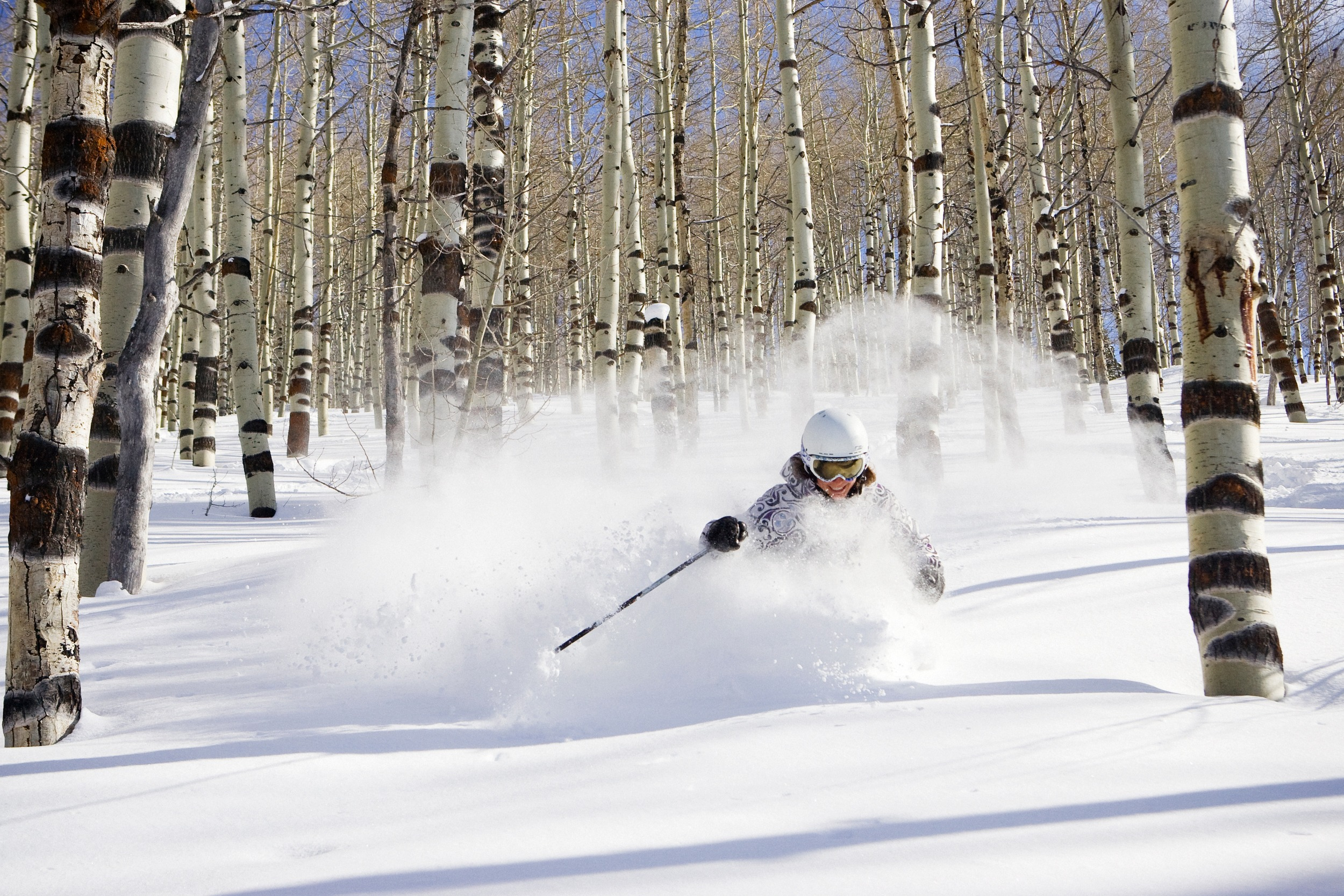
They’ve called it “The Greatest Snow On Earth” for longer than most of us have been skiing. The snow in Utah really is the greatest because it is prodigious, light and fluffy everywhere you put sticks and boards on snow.
Many people believe that Utah is ideal if this is your family’s first Western ski vacation. The prices are better than the often more glamorous big name Colorado superstars (with a few exceptions) and the entire atmosphere is more relaxed. The ski schools cater to all ages and abilities and you will have a terrific time together.
Besides all that, it would take your entire vacation and then some to ski all or even most of the terrain at any of the larger destinations. It’s endless skiing and snowboarding here. You can easily resort hop because the resorts are grouped in several geographic parts of the state.
Don’t believe what you hear about Utah being a “dry” state. It’s not. But you need to order food with your booze in a restaurant and the bars close at 1 a.m. What do you care? You’ll be skiing in the morning.
What ski resorts are near Salt Lake City and the Wasatch?
There are 9 resorts within that long snowball’s throw (an hour or less) of the Big City: Alta, Brighton, Solitude, Deer Valley, Park City Mountain Resort, Powder Mountain, Snowbasin, Snowbird and Sundance.
What ski resorts are located in the Cottonwood Canyon close to SLC?
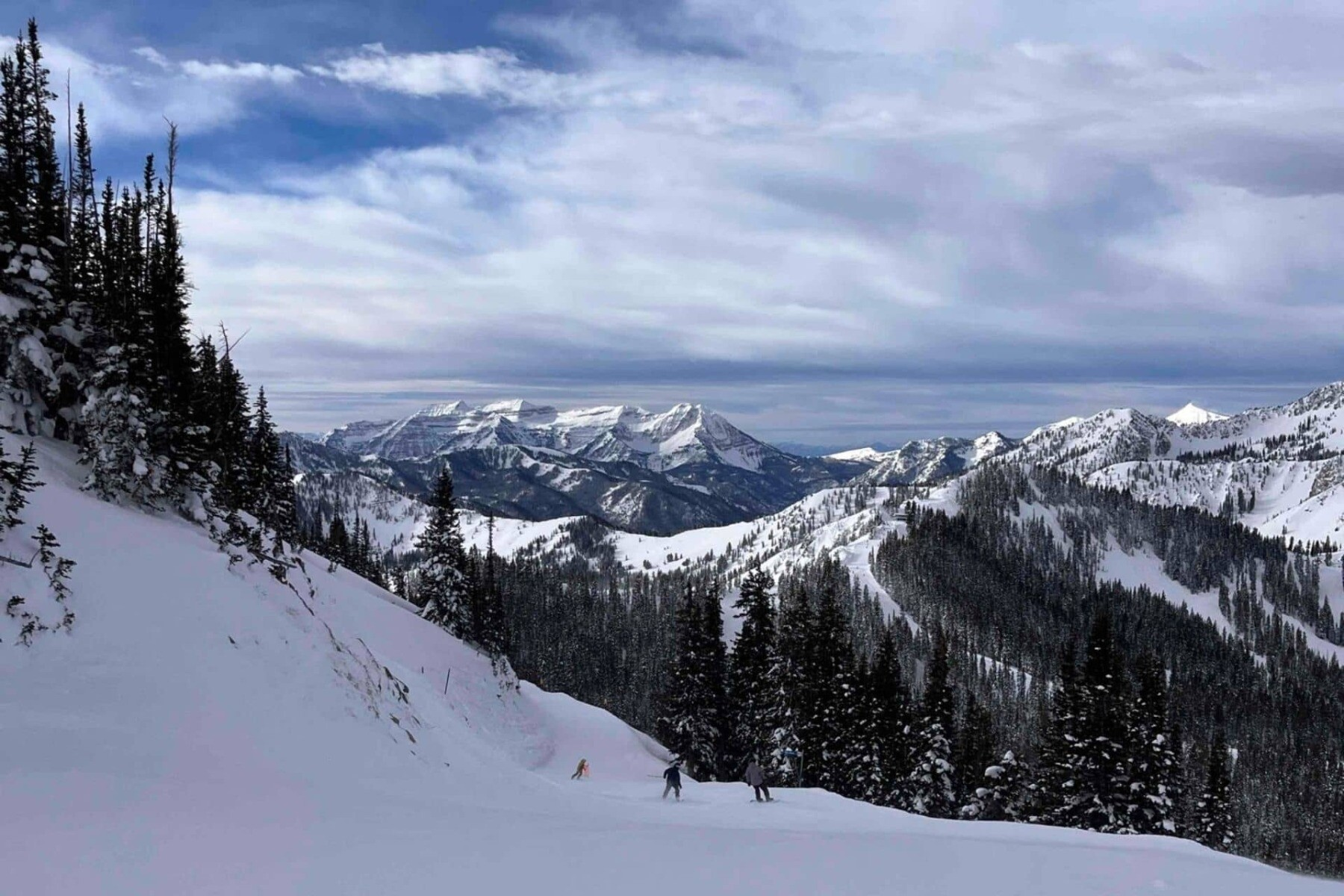
Enjoy skiing and riding at Snowbird and Alta in Little Cottonwood Canyon with Brighton and Solitude in Big Cottonwood Canyon.
What ski resorts are located in the old mining town of Park City?
Have fun playing at Park City Mountain Resort and Deer Valley. Woodward Park City is also located here for indoor sports.
What ski resorts are close to Ogden?
Nearby you’ll find Nordic Valley, Powder Mountain and Snowbasin.
Can you ski near Provo?
You sure can. Sundance is closeby.
What ski areas are located in Northern Utah?
Try Beaver Mountain Resort and Cherry Peak.
Where can we ski or ride in Southern Utah?
Brian Head and Eagle Point are your choices down south.
Are ski passes worth buying for skiing Utah?
Absolutely – particularly if you want to ski or ride multiple resorts. If you only want to ski at Park City Mountain Resort, for example, go for the Epic Pass (owned by Vail Resorts), but either the Epic or the Ikon Pass are perfect for most Utah resorts. And don’t overlook the Indy Pass.
Here are some questions and answers about Utah, the Land of Enchantment:
Which Utah ski resorts are best for beginners?
There are many ski areas that are beginner friendly, including: Alta, Snowbird, Beaver Mountain, Brian Head Resort, Powder Mountain, Brighton, Snowbasin, Cherry Peak, Solitude Mountain Resort, Deer Valley, Eagle Point, Nordic Valley and Park City Mountain Resort.
Only three ski resorts in the country do not welcome snowboarders, two of which are in Utah: Deer Valley and Alta Ski Area. The other, just fyi, is Mad River Glen in Vermont.
What are the largest ski resorts in Utah?
The largest ski resort is Powder Mountain with 8,468 total acreage and 3,200 feet of vertical drop, and Park City Mountain with 7,300 total acreage and 2,205 feet of vertical drop are the two largest ski resorts in Utah.
How many ski resorts are there in Utah?
There are 15 resorts (counting the Woodward indoor training center) in Utah and 10 of them are within and hour of Park City.
What are some of the best ski resorts in Utah
Park City Mountain Resort: The mountain makes up the largest ski resort in the United States. It sits right in the heart of town. There are 7,300 skiable acres, more than 330 trails, 43 lifts, 6 terrain parks and ski-in-ski-out access to historic Main Street. Every level of skier and snowboarder will find endless fun here.
Alta Ski Area: Alta remains a class ski area act – a throwback to the days before the mega resorts. It has loyal followers from all over the world. It prides itself by eschewing the “resort” tag. It’s not. It’s better. It has been independently owned and operated since 1938. Alta sits atop Little Cottonwood Canyon deep in the Wasatch. It is famous for its powder skiing and collects an annual snowfall average of 540 inches. You won’t wait for a powder day. Alta ski resort is different and, as the French say, vive la difference.
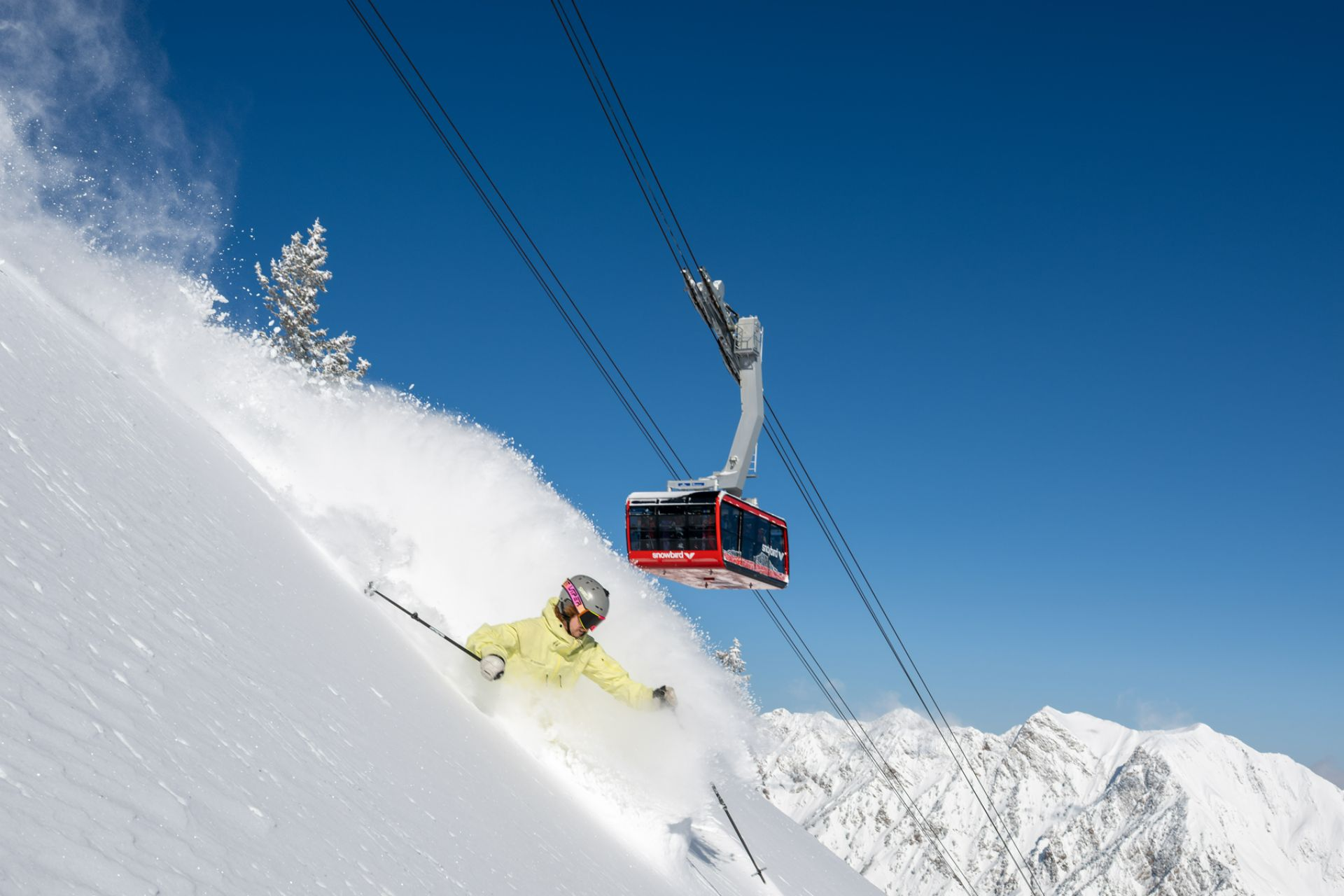
Snowbird: A snowball’s roll slightly down from the top of Little Cottonwood and Alta, this very modern, exciting Utah ski resort is ideal if you are looking for lots of creature comforts, a huge mountain (did we say close to Alta?) The ‘Bird offers 3,240 vertical feet of terrain suitable by all skill levels of skiers and riders. Snowbird usually has Utah’s longest ski season and annually averages 500 feet of snow. It’s just a 45 minute drive from Salt Lake City International Airport, making same-day flying and skiing a reality when the weather cooperates for a quick drive up the hill.
Deer Valley: This is the elegant resort in Park City. Deer Valley resort offers luxurious amenities such as ski valets, groomed-to-perfection slopes, onsite child care and gourmet dining in three elegant day lodges. There are a variety of upscale lodging options with resort-managed properties, an excellent ski school and three ski rental shops featuring high-quality Rossignol equipment. Remember, no snowboarding here.
Sundance: Made famous by founder Robert Redford, Sundance retains all its natural beauty and cultural ambiance carried forward by its new ownership team. There are 5,000 acres of protected wilderness at the base of 12,000-foot Mt. Timpanogos, only an hour’s drive from Salt Lake City and 45 minutes from Park City. The Sundance-certified instructors make skiing and lessons fun.
Brian Head: Having fun in Las Vegas? Well, you can be skiing at Brian Head in about three hours. It’s only 30 minutes from Cedar City as well. There’s an average 360 inches of annual snowfall, 2 high-speed quad lifts, 6 chairlifts, 3 surface conveyors, 71 runs and 650 acres of skiing and riding.
Which is better Utah or Colorado?
It’s probably a toss-up and both states have their unmovable opinion-givers. It is really true that the “Greatest Snow on Earth” is in Utah. But the fluffy powder that falls on the Colorado ski slopes often matches it flake for flake. Utah is a bit more relaxed, not particularly glitzy (think Aspen or Vail vs Alta or Sundance). It is clearly less expensive at most Utah resorts. But, you’ll be on the slopes in less than hour from SLC airport in Utah; don’t count on anything near that from Denver International.
How cold is it?
It’s not the coldest ski state, but it isn’t the warmest either. Ski season generally runs from mid-November through mid-April, depending on the weather and snowfall totals. The mid-winter months are the coldest as you would expect, with temperatures averaging in the low 30s and dropping to single digits by nighttime.
What is the best month for skiing in Utah?
Utah now is usually consistent from start to finish, but the best time to play on it is in February and March as the usually prolific base has built and the snowfall this time of year is regular. Besides, spring skiing is starting in mid-to-late March.
What are some popular ski towns in Utah?
The closest city to Utah ski resorts is Salt Lake City and, while not technically a ski town, it sure feels like one in winter. A balance between nature and city life, the Capital City lies in between Great Salt Lake and the Wasatch Mountain Range. Ski during the day; then dine at night at one of Salt Lake's international-style restaurants or one that specializes in local cuisine. Good nightlife, too. All that skiing is right up the hills in several directions.
Park City is one of the best preserved mining towns in the U.S. Historic Main Street shops house vibrant art galleries, independent boutiques, and inventive restaurants. It has a small-town vibe and is a perfect base for taking turns at Park City Mountain Resort and Deer Valley. It’s also host to the annual mid-winter Sundance Film Festival if watching mostly non-skiing celebs in black is your idea of fun.
Just 250 miles from Salt Lake City and 170 miles from Las Vegas is the town of Cedar City. It’s known as Festival City, USA due to its theatrical and cultural offerings like the Utah Shakespeare Festival, Neil Simon Festival, Utah Summer Games and Cedar City Livestock & Heritage Festival. It’s also home to family-friendly Brian Head Ski Resort. The historic downtown has it all: a variety of dining spots, craft beer, shopping.
Ogden, another large town, hosts over 1 million visitors each year. Not only can you find abundant city life, but you've got outdoor recreation of every type. The city is the gateway to the ski resorts of Snowbasin, Powder Mountain and Nordic Valley, 20 miles from downtown Ogden. Historic 25th street, once home to Prohibition-era speakeasies, has become “the place” for shoppers, foodies, history buffs, and art collectors. Take the kids to George S. Eccles Dinosaur Park featuring those big, ugly lizards.
How do we get there?
It’s a goodly drive from California, Arizona, New Mexico and Colorado, but most people fly into Salt Lake International Airport that’s within an hour for great skiing.
Summing it all up: Utah is a world-class ski region
Utah is among the world-class ski regions in the world. Whether this is your family’s first ski vacation or you come back year after year, you can be pretty well guaranteed you’ll have a wonderful time playing on the "greatest snow on earth." Haven’t been here? Fix that this season.
SkiGPT